Showing posts with label Boats. Show all posts

Friday, May 06, 2016

Reflecting on Nature


While sorting through a few archived images for a project, I was struck with how many of them had one striking feature in common: reflections. Whether in sea water, glass or even wet pavement, this simple phenomenon has the power to captivate. I have to admit that I'm pretty much addicted to them. Sometimes the morning sun's low angle sets off a perfect combination of elements to create an unforgettable image.


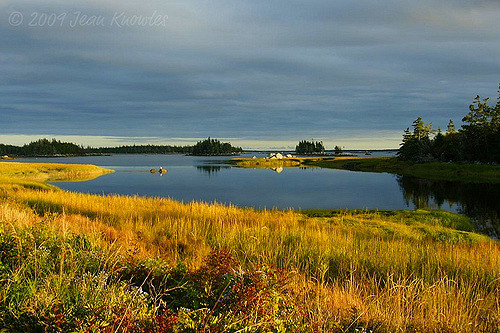
Sometimes it's the evening light that does it, turning marsh grass to gold, deepening the colours of the blue-grey clouds and painting the granite rocks a stark white, like this scene in Atwood's Brook, NS.


Blue Rocks, Nova Scotia, is a picturesque spot at any time, but the touch of the early morning sun on the golden shades of autumn can make it even more beautiful.


Evening's soft rose tones on a winter day can create a Rorschach sunset around the inshore islands. This is another scene from Atwood's Brook, NS.


A few sanderlings scouting for food at the water's edge make for some striking reflections in the wet sand of Daniel's Head Beach, Cape Sable Island, NS.

Wednesday, May 15, 2013

Tales from the Kyle


One hundred years ago, on April 17, 1913, the SS Kyle began her maiden voyage. Constructed in Newcastle Upon Tyne, UK, she was destined for use on the service between Carbonear, Newfoundland, and the coast of Labrador, and was used for a time on the crossing between Port-aux-Basques, Newfoundland and North Sydney, Nova Scotia. During World War II she transported soldiers from the Dominion of Newfoundland to Canada, and later in her career was fitted as an icebreaker. Operated by the Reid Company of Newfoundland as part of its renowned Alphabet Fleet, which got its name from the fact that the names of the company's vessels began with successive letters of the alphabet, each with a Scottish connection: Argyle, Bruce, Clyde, Dundee, Ethie, Fife, Glencoe, Home, Inverness, Kyle, Lintrose and the Meigle. These sturdy ships carried passengers and freight around the coast of Newfoundland and to and from Labrador; they were an essential part of everyday life for coastal residents from the 1890s until the mid-twentieth century. 


The Kyle became a beloved part of Newfoundland lore when storyteller Ted Russell of Coley's Point, Conception Bay, penned his poem about her as part of his Tales of Pigeon Inlet:

The Smokeroom on the Kyle

by Ted Russell

Copyright : The Estate of Ted Russell

Tall are the tales that fishermen tell when summer’s work is done,
Of fish they’ve caught, of birds they’ve shot, of crazy risks they’ve run.
But never did a fisherman tell a tale, so tall by a half a mile,
As Grampa Walcott told one night in the Smokeroom on the Kyle.
With ‘baccy smoke from twenty pipes, the atmosphere was blue.
There was many a “Have another boy” and “Don’t mind if I do.” 

When somebody suggested that each in turn should spin,
A yarn about some circumstance he’d personally been in.


Then tales were told of gun barrels bent to shoot around the cliff,
Of men thawed out and brought to life that had been frozen stiff,
Of bark pots carried off by flies, of pathways chopped through fog,
Of woodsman Bill who, barefoot, kicked the knots out of a twelve inch log.


The loud applause grew louder still when Uncle Mickey Shea,
Told of the big potato he grew in Gander Bay.
Too big to fit through the cellar door, it lay at rest nearby,
Until, one rainy night that fall, the pig drowned in it’s eye.


But meanwhile in a corner, his grey head slightly bowed,
Sat Grampa Walcott, eighty-eight, the oldest of the crowd.
Upon his weatherbeaten face there beamed a quiet grin,
When someone shouted, “Grampa, ‘tis your turn to chip in.”


“Oh, no boys, leave me out,” said Grampa. “Oh thanks, don’t mind if I do.
Ah, well alright boys, if you insist, I’ll tell you one that’s true.
It’s a story about jigging squids I’m going to relate,
And it happened in Pigeon Inlet in Eighteen eighty-eight.


Me, I was just a bedlamer then, fishin’ with my Dad,
And prospects for the that season, they were looking pretty bad.
Now, the caplin scull was over and that hadn’t been too bright,
And here was August come and gone and nar a squid in sight.


Day after day we searched for squid, ‘til dark from the crack of dawn.
We dug up clams and cock n’ hens ‘til even these were gone.
And still no squids so, in despair, we give it up for good,
Took our gear ashore and went cutting firewood.


Now, one morning, while out in the woods with all the other men,
And wondering if we’d ever see another squid again.
Father broke his axe that day so we were the first ones out,
And as we neared the landwash, we heard the women shout.


“Come hurry boys, the squids are in.” Well, we jumped aboard our boat,
And started out the harbour, the only crew afloat.
But soon our keel began to scrunch like scrapin’ over skids.
“Father,” says I, “we’ve run aground.” “Me son,” says he, “that’s squids.”


Said he, “The jigger, heave it out,” and quick as a flash I did,
And soon as it struck the water, ‘twas grappled by a squid.
I hauled it in and what do you think? As soon as he crossed the rail,
I’ll be darned if there wasn’t a second squid clung on to the first one’s tail.


And another clung to that one and so on in a string.
I tried to shake ‘em loose but Father said “You foolish thing.
You’ve got something was never seen before in Newfoundland.
Drop the jigger, grab the string and haul hand over hand.”


I hauled that string of squids aboard ‘til the boat could hold no more,
And then we hitched it in the risings and rowed for the shore.
Now the men were coming from the woods, they’d heard the women bawl,
But Father said, “Don’t hurry boys, we’ve squid enough for all.”


So Uncle Jimmy, he took the string until he had enough,
And, neighbour-like, he handed it on to Skipper Levi Cuff.
Well, from stage to stage that string was passed throughout the whole night long,
‘Til daylight found it on Eastern Point with Uncle Billy Strong.


Now Uncle Bill, quite thoughtfully, before he went to bed,
Took two half-hitches of that string ‘round the grump on his stagehead.
Next morning Hartley’s Harbour heard the news and up they come,
In a trap skiff with three pair of oars to tow the string down home.


And when Hartley’s Harbour had enough, the following afternoon,
That string went on from place to place until it reached Quirpon.
Now, what happened to it after that, well I don’t exactly know.
But some folks say that it crossed the Straits and ended in Forteau.


Yes, tall are the tales that fishermen tell when summer’s work is done,
Of fish they’ve caught and birds they’ve shot and crazy risks they’ve run.
But never did a fisherman tell a tale, so tall be a half a mile,
As Grampa Walcott told that night in the Smokeroom on the Kyle.*

In 1967, after long and varied service, the Kyle was retired at anchor in Harbour Grace; she broke free during a severe storm in that year and grounded just off Riverhead, where she can be seen to this day.  

*Click on the link to hear Ted Russell's "The Smokeroom on the Kyle" as told by his son Kelly.

Sunday, May 12, 2013

I Like Big Boats and I Cannot Lie

I've always loved working boats, both big and small to be honest, and there are few places better suited to someone with a love of such boats than Atlantic Canada. From the sandy shores of Prince Edward Island to the tides of the Bay of Fundy, shared by Nova Scotia and New Brunswick, to the rocky coast of Newfoundland and Labrador, this region has a wealth of boats of all shapes and sizes.


They can be found in small towns and big cities, tied up at wharves, riding at anchor, or moored "on the collar" in small coves whose names don't appear on any map. The unifying thread among all these boats is their utilitarian grace. They're built for work, not for show, but they have an innate beauty that's a bit poignant somehow, as if try as they will, they just can't help being graceful and elegant.


These days their hulls might be fiberglass, metal or even concrete, but there was a time when every one of them had been built from wood in a local boat shop. Examples of those older wooden boats can still be found if you're willing to look; they might be housed in museums where they're carefully studied for their lines, hauled up on the shore and falling into ruin, or -- in some rare cases -- lovingly patched and mended and still afloat after seventy-five or a hundred years of plying the North Atlantic.


I particularly like those parts of the region where there's a lot of individuality expressed in the colours of the boats; those bright reds and yellows and blues and greens add cheer to a foggy day, and from a practical standpoint of those who wait on shore, it's a lot easier to recognize the boat you're looking for when it rounds the headland making for home. Although today's navigational and safety equipment have reduced the hazards, fishing is still a dangerous way to make a living; here's wishing safe home to all those boats, and to those who travel in them.


Saturday, March 16, 2013

The Master Boatbuilder

If you happen into Trinity on a summer's day, you may just be treated to one of Newfoundland and Labrador's most beautiful sights: the schooner Leah Caroline as she slips into view, sails set to catch the wind. This beauty was built by Henry Vokey, a resident of Trinity and a boatbuilder since the 1950s. Henry grew up in the now-resettled community of Little Harbour, Trinity Bay; when he moved to Trinity he established Vokey's Shipyard, which produced over a thousand vessels from rodneys (small punts) to longliners using traditional methods, and at times employed up to forty people. With the shutdown of the shipyard in the 1990s, Henry continued building boats from the shed behind his home. In 1986, the schooner J & B was launched from the shipyard; it was operated as a tour boat for a number of years before being lost in a hurricane in 2007. Recently, Henry decided that it was time to build another schooner. The result is the beautiful and graceful Leah Caroline, launched in July of 2012. The day of the launch was a festive one in Trinity, drawing a large crowd despite the rainy weather. See a video of the launch, posted by Dale Gilbert Jarvis, Intangible Cultural Heritage Development Officer for the Heritage Foundation of Newfoundland and Labrador, here.

Friday, March 08, 2013

The Reason for All that Red

One of the striking features of the Atlantic Canadian landscape is the abundance of red buildings, especially barns, outbuildings and sheds, in the vernacular architecture. There's an excellent reason for this, deeply rooted in the heritage of the region: because of the huge deposits of iron in the area, the iron oxides used for this handsome range of colours occur naturally here. It's ochre (or ocher), which has been used as a pigment for thousands of years.


 Technically, ochre is defined as "any of various natural earths containing ferric oxide, silica, and alumina: used as yellow or red pigments" and the yellow shades show up, too, but it's definitely the reds that dominate. Place-names all over the region reflect this; it's easy to find places called Ochre Pit Cove or Ochre Hill, and there are also place-names that refer to red, signalling the rusty tones that oxidizing iron can give the soil. The naturally-occurring pigment, sometimes treated by burning, was mixed with linseed oil in many places, but here in Atlantic Canada it was almost universally mixed with ingredients that were much more readily available locally: seal oil or fish liver oil. Oral tradition has it that the brighter reds were obtained with seal oil, while fish oils gave a darker, reddish-brown tone.

Use of red ochre in Newfoundland, though, goes back to a time long before the first Europeans arrived; the island's native population, the Beothuks, gathered ochre and used it to paint canoes and other artifacts and even their bodies. The Beothuk culture, ancestrally related to the Mi'kmaq, emerged around AD 1500, ending in 1829 with the death of the last surviving Beothuk, Shanawdithit.

Today, the red paint used often comes from commercial pigments, but the resulting look is very much a part of local tradition and culture.


Saturday, March 02, 2013

Orca!


At some point during Newfoundland and Labrador's summer whale watching season, usually late July or August, the word goes out that killer whales, or orcas (Orcinus orca), have been sighted in one of the province's many bays. The call goes out all along the shore -- these big predators are fascinating and exciting to watch. These are transient pods, meat-eaters, and they're on the hunt, often for minke whales. Unlike resident orca pods, these transient pods are dedicated hunters of mammals. Their feeding habits are so ingrained and so markedly different from those of resident pods, that there's actually a move to recognize similar transient whales in the North Pacific as having developed into a separate species, Biggs Killer Whales, named in honour of researcher Micheal Biggs.


Although visits from these whales are relatively rare, they occur regularly enough that they have afforded some opportunity for research and identification. Photographs of the whales' dorsal fins, the pale "saddle" patches on their backs, and their other distinctive markings have shown us that there are at least four distinct groups or pods, designated A through D by observers. While they are most often observed around the coast of the Northern Peninsula and Labrador, they make occasional forays around the entire coast of Newfoundland in search of a likely-looking food source. In the August of 2011, several attacks on prey species were documented around the Avalon Peninsula and there are numerous photographs and video recordings of their kills; the pod involved was D pod, identified by the V-notched dorsal of its lead female and the crinkled, forward-raked dorsal of the pod's largest male.


Orcas are no newcomers to the shores of Newfoundland, as illustrated by the carved-bone orca effigies found at Port au Choix National Historic Site, where evidence of settlement spans some 4000 years. They're still fascinating to residents and visitors alike.


Thursday, February 28, 2013

"We went because they needed answers"

On February 17, 2013, the fishing boat Miss Ally, with five men aboard, was lost in a storm off the South Shore of Nova Scotia. The hull of the craft was sighted, but searchers chose not to examine it right away. At the request of the families of those on board, a full day before "official" crews examined the hull of the Miss Ally, four divers from Shelburne County had been to the hull to provide answers for those grieving families. Please follow this link to look into the faces of these true heroes of the community. Their heartfelt gift was to help in the only way they could.


Wednesday, October 24, 2012

Captivating Fogo

North of Gander in central Newfoundland lies the port of Farewell, terminus for the ferry to Fogo and Change Islands. These island communities are not only beautiful but culturally captivating -- they provide a glimpse into a traditional Newfoundland way of life that's fast disappearing in many places. Change Islands is dealt with in another post, but Fogo is worth a bit more exploration. One highly recognizable feature of Fogo Island is the abundance of fishing stages painted in shades of red ochre. They are especially striking when seen in evening or morning light,
like the one above. The landscape is uncompromising: barrens and scrubby trees give way to rocky headlands; houses and fishing stages cluster in snug harbours while surf pounds the exposed shorelines nearby. There's no question that Fogo Island holds almost endless appeal for photographers, but the island has a vibrant life of its own. As in much of Newfoundland and Labrador, fishing remains an important source of income for many
islanders, as reflected in the song "The Joe Batt's Arm Longliners". There's commerce as well, and a thriving tourism industry in the summer months. Change is afoot on the island, though, as the Shorefast Foundation works to create opportunity for local entrepreneurship. Fogo Island is nearby and yet a world apart; it is an unforgettable destination filled with stark beauty and strong character.


Tuesday, October 16, 2012

Autumn in the Bay of Islands

Autumn in the Bay of Islands on Newfoundland's west coast is one of Atlantic Canada's best-kept secrets. Dramatically sculpted hills are covered with mixed forests that provide some of this region's finest displays of fall foliage, and the city of Corner Brook provides a scenic focal point for all this splendid color. The Humber River was named by Captain James Cook during his hydrographic survey expedition to the area in 1767. In 2012, a statue of Cook by renowned sculptor Luben Boykov was unveiled; it can be seen on a hilltop overlooking
Corner Brook and the Humber Arm. Cook spent several years charting the coasts of Newfoundland, beginning in 1762; his stay in the Bay of Islands region marked the final year prior to his voyage to Tahiti. The broad, sheltered waterway he mapped is lined on both north and south sides by a series of small communities that boast impressive views of Guernsey, Tweed and Pearl Islands in the distance or of Corner Brook itself. A short drive along the south side of the bay leads to York Harbour and Lark Harbour, while a similar trip along the north side leads through Irishtown and Summerside, ending at beautiful Cox's Cove (seen below) where in summer, True North Charters provides a boat tour that explores the nearby coastline, including the striking headland known as Penguin Head.


The Corner Brook area also boasts a network of walking trails that is well-used by local residents; the sections that lead alongside the Corner Brook Stream are particularly attractive during foliage season. A short drive to the north is
Marble Mountain, Newfoundland's best-known ski hill, where the autumn color of the surrounding valleys is reflectedin the pools and rills of the Humber. This region of Newfoundland's west coast is beautiful at any time of year, but the brightly painted hills of fall make it well worth an extended visit.

Tuesday, August 14, 2012

A Morning With the Seabirds

You'd definitely have to call it a busman's holiday: on the day following my last Newfoundland Adventure of the 2012 season, I drove to Bay Bulls for a trip with friends. We headed for Captain Wayne's Marine Excursions and boarded the Blackfish 1 for a visit to the Witless Bay Ecological Reserve and a look at the surrounding coastline. After a loop through Island Cove, a look at the sea stacks of Spoon Cove, and a visit to a beautiful sea cave, we struck out for Gull Island, nesting site for thousands of Atlantic puffins, kittiwakes, murres and storm petrels. Light fog was hanging over the area and sea conditions were excellent, with an ocean so calm that the hundreds of birds in the water cast perfect reflections. We travelled slowly alongside Gull Island, pausing to photograph the puffins outside their burrows on the grassy slopes and lounging on the rocks near the water's edge. These photogenic little birds seemed to be in a particularly cooperative mood, posing for us as we slipped past. Although the fledging season is here and many pufflings have already left their burrows, there were still plenty of adults to be seen. There were also many common murres, some
guarding chicks that had not yet fledged. The young birds are ready to leave the nest at about three weeks of age;; unable to fly, they tumble or glide down the cliffs to the water below. Once the chick has fledged, the male parent attends it closely for up two two months as the birds venture out to the open sea. Within about two weeks the young are able to fly. The female stays at the nesting site for an average of two weeks or slightly more. This is the time of year when the
dense concentration of murres on the island begins to thin out.

A little farther south on the island, an unusual sight awaited us: one of this year's black-legged kittiwake chicks exhibited a condition called isabellism, a dilution of melanin, the pigment that colours the bird's black feathers and legs. In isabellan birds, one of the two types of melanin, Eumelanin and Phaeomelanin, is missing, resulting in a bird that shows a pale tan colouration
in areas that are normally dark.

As we reached the southern end of Gull Island and headed for open water, we found that the fog and onshore wind had brought a large number of greater shearwaters, birds that are usually found far at sea. These birds nest in Tristan da Cunha, a remote group of volcanic islands in the South Atlantic. One of these curious birds swam up to the boat to investigate us, providing a great opportunity for a close-up shot. From our shearwater encounter, we headed north to view the area's beautiful coastline; more about that in a later post.

Thursday, August 02, 2012

The Summer of the Whales

It's been an extremely busy summer, and one filled with remarkable experiences. For tour boat operators and land-based whale watchers alike in eastern Newfoundland, it's been the Summer of the Whales -- a summer of flipper-waving, spyhopping, tail-lobbing, barrel-rolling, breaching excitement. In a word, wow!

The whales have been cavorting around the Avalon Peninsula and in Bonavista and Trinity Bays,
and each week's adventures around those areas with Wildland Tours have been enriched by memorable encounters with humpbacks. It seems as though every trip with Sea of Whales Adventures, O'Brien's Boat Tours, or Captain Wayne's Marine Excursions has produced a bumper crop of sightings and photo opportunities, and the sightings just keep on coming. The weather has been outstanding, too, with brilliant sunshine, warm temperatures and
evenings filled with golden light -- all the better to record the interaction with the whales. It's early August now, and although the seabird population is beginning to diminish as the birds leave for another season, the whale encounters show no signs of slowing down. I know for certain that it's a great year to be a whale watcher in eastern Newfoundland, and judging by all the cetacean activity going on along our shores, I think it must be a great year to be a whale!


Friday, June 22, 2012

Echoes from the Past

On the eastern edge of Newfoundland's Bonavista Bay lie a trio of communities accessed by a single turn from the main road. They are Open Hall, Red Cliff and Tickle Cove; each has its own beauty, but in Red Cliff there's a scene of great poignancy that for me illustrates an important aspect of today's Newfoundland and Labrador: abandonment. More and more the small communities of the province's rural areas are being abandoned for the city of St. John's or for areas further afield. There's an economic necessity behind this move, but while that reality makes the move understandable there's an underlying sadness in it all. Houses are abandoned because there's simply no one to sell them to. Not every
snug, comfortable little house by the water can be turned over to new occupants; there's little work to be found in the area, so what were once beloved family homes now stand empty, with vacant windows staring out to sea. Boats were hauled up from the shoreline after their last day of fishing, turned over to shed the rain, then never returned to the water. The houses and boats make beautiful and haunting images, but they speak volumes about a society in which not only buildings and boats but an entire way of life have been abandoned.


Saturday, May 26, 2012

A Great Way to Spend an Evening

The call came yesterday evening: "I'm going out to visit the iceberg. Care to go?" Of course the answer was yes, so after a couple of phone calls, a friend and I were on our way south from St. John's to Bay Bulls, headed for Captain Wayne's Marine Excursions on the Northside Road. The Captain himself was waiting on the front deck of the ticket office, ready to fit us with warm jackets for the evening ride. The sun was sinking low in the sky, bathing the scene in golden light. We
boarded Blackfish 1 and headed out toward the mouth of Bay Bulls, where a large tabular iceberg was grounded on a ledge just off South Head. We kept a respectful distance, staying back at least the length of the berg at the waterline. The ice glowed golden in the sunlight, bringing out the textures in sharp relief, and waves roared as they rolled under a small ledge at the water's edge. Streams of meltwater sparkled as they caught the light, falling from its flat upper surface. We
completed our circuit and headed back in the bay as the sun was setting, streaks of pastel pink painting the sky. We returned to the dock and tied up just as the sun was sinking below the horizon. What a perfect end to the day!

It's a good year for icebergs along the coast of Newfoundland and Labrador, with prospects of bergs staying around well into June. An excellent resource to see where bergs can be found and to learn more about how they are formed, how they reach our shores and where they come from, can be found by following this link.


Wednesday, May 23, 2012

For the Love of Whales

Wayne Maloney of Bay Bulls, NL is an admitted whale-aholic -- at least that's how he puts it. He's addicted to the big cetaceans that make their way to the shores of Newfoundland and Labrador every summer to feed. Wayne's been operating the boats that go out whale watching from Bay Bulls for close to thirty years. He's the son of boatbuilder Gene Maloney, so when he found himself in a position to start a whale watching
business of his own, the question of where he'd get a suitable boat wasn't difficult: he'd build it. And build it he did -- from the keel up, and from a design that incorporated a "wish list" that was many years in the making. Countless hours were spent poring over plans to get the lines just right, and the details of the deck layout complete. Theatre seating would allow for excellent forward-facing viewing, and the aft cockpit would mean uninterrupted sightlines for those on board. The shot above shows this beautiful boat, christened
Blackfish 1, in progress. He'd be the first to tell you he didn't do it all himself; he's quick to give credit to the good friends who lent a hand, a strong back, or a heaping helping of moral support. Their assistance just helped to spur on the inevitable, though, since this is a man who was born to the water and who has what seems to be uncanny whale sense. He's studied humpbacks and their habits for years, and it's paid off in a knowledge of whale psychology that's remarkable to see in action. It's all based on a deep-seated respect for the whales, and for observing their interaction without intrusion. In addition to the humpbacks that arrive in the area in midsummer, there are minkes, fin whales, dolphins, occasional visiting pods of orcas on the hunt, countless seabirds to be seen on the islands of the Witless Bay Ecological Reserve and miles of spectacular coastal scenery. Wayne and Blackfish 1 are now in business as Captain Wayne's Marine Excursions, and can be found on the Northside Road in Bay Bulls, NL.

Wednesday, April 18, 2012

Icebergs and Sun Pillars

On Monday evening a friend called to say that there were a couple of icebergs grounded just outside the "gut" at Quidi Vidi, a small village that's part of St. John's. Would I like to go take a look? I didn't have to be asked twice -- I love the icebergs that work their way south along the Labrador current in spring and early summer, and I wasn't about to pass up an opportunity to see and photograph one, especially in a setting as picturesque as Quidi Vidi. We drove to a point above the village, then walked to the Quidi Vidi Battery, not yet open for the season. The hill gave a commanding view of the bergs in the narrow opening to the small harbour; the two bergs were of completely different
shapes, one flat or tabular and the other pinnacled and looking a bit like a huge white walrus. There were thirty or so people gathered on the point, taking photos or just enjoying the view, but the light was fading fast. We decided to return the following morning to see the bergs in the early light. Serendipity provided the perfect weather conditions for a sun pillar as the day dawned, making for a spectacular scene that was well worth the early start. When an opportunity arose for yet another visit to the bergs that evening, of course I couldn't resist. After a walk to the end of the Barrows Road and a scramble across the rocks, another friend and I joined the watchers on the point and settled in to
enjoy the view and the changing light. We were delighted to see a couple of colourful kayaks head out for an evening paddle, past the bergs and along the coast. While they were gone, the tabular berg shifted on the tide and nearly closed off the opening to the harbour; fortunately there was enough room for them to get past, but the return trip was definitely a bit more challenging than the outbound one. Thanks to those two kayakers for adding extra interest to this beautiful evening!

There is a website that provides location data and background information on icebergs in Newfoundland and Labrador -- www.icebergfinder.com operates during iceberg season and gets its data from both satellite and local observer information.

Thursday, April 12, 2012

The Rambles of Spring

It was a great day for a spring ramble in Southwestern Nova Scotia -- it dawned clear and sunny, and the road called out for wandering. The perfect song for the occasion was running through my head: The Rambles of Spring, written by Tommy Makem and performed by Makem and Clancy: "The days are on the mend and I'm on the road again."

As for which way to travel, the options are fairly limited in this part of the country: up the road or down the road. Thanks to the long, narrow shape of Nova Scotia, its southwest/northeast orientation, and the fact
that Shag Harbour is near its southernmost tip, "up" the road is roughly north and "down" the road is roughly east. This quirky geography is also responsible for the fact that the same stretch of coastline is the South Shore on one side of Halifax and the Eastern Shore on the other, the North Shore roughly parallels the Eastern Shore, and Western Shore is a community on the South Shore. Honest. So "up" it was -- through part of Shelburne County, Yarmouth County and into Digby County. This region of Nova Scotia is largely Acadian in heritage, predominantly
French-speaking and with a unique and vibrant culture. The landscape in this part of Nova Scotia consists of rolling hills covered in dense forest, with a broad coastal plain that's often made up of wetlands and saltmarsh. The communities of the Clare District, as it's known, follow the main road through the region, so Nova Scotia's Route 1 is sometimes referred to as the country's longest Main Street. Each community along the road boasts its own distinctive Roman Catholic church, including North America's largest wooden church at Church Point and an impressive stone structure at St. Bernard.

A visit to this area wouldn't be complete without a stop at the Roadside Grill in Belliveau's Cove, a tiny, unassuming place that serves up heaping portions of succulent deep-fried clams gathered on the local flats, burgers, turkey dinners and a delicious Acadian dish called Rappie Pie or Rapure that's made from grated potatoes and chicken, beef or clams. There's no pastry crust involved; the potatoes crisp on the edges to form a crispy shell. There are two schools of thought on this
delicacy -- I'm one of those who consider it a plateful of pure bliss, but there are others who run screaming into the night at the very mention of its name. The service at the Roadside Grill is friendly and efficient, and there's a real sense of neighbourhood here; the waitresses know most of the customers by name and sometimes don't even bring menus since the customers know the offering here as well as the staffers do. Next to the restaurant there is a tidy little row of tourist cabins that are available for rental, in a perfect 50s flashback. After a great, hearty meal at the Grill it was time to head for home. The day definitely qualified as a great spring ramble!


Thursday, March 15, 2012

Road Trip!

A long-postponed business trip on a March afternoon had an unexpected benefit: an opportunity to explore the southern reaches of Conception Bay on my way back. I've been wanting to visit the community of Conception Harbour for what seems like ages, but the opportunity didn't present itself until Wednesday. There are two scenes in this little community that have captured my attention; the first is a pair of tidy white houses and a row of red outbuildings associated with them, sometimes glimpsed from the main road across a small cove. They can also be seen, among other places, in the delightful blog posts of Vicky Taylor-Hood. The other is
a derelict steel-hulled ship run aground on a rocky point. The original plan had been to scuttle this vessel, the SS Sposa, along with four other disused whaling ships in the mid-1960s. While the others were sunk in deep water, the Sposa broke free during a storm and ran aground where she now lies. Whaling no longer takes place here, of course, but there are reminders of those days here and there along the coasts of Newfoundland and Labrador.


Saturday, March 03, 2012

Peggy's Cove -- Off Season

March decided to come in like a lion in some parts Nova Scotia, bringing with it a nor'easter that made travel conditions miserable and dumped the winter's first real load of snow on the southwestern corner of the province. Typically, the northeasterly winds that give these storms their name bring with them temperatures close to the freezing point; ironically these relatively mild temperatures are what can make a nor'easter deadlier than a storm that brings colder conditions. When it's near the freezing point, snow is heavy and wet. It doesn't stop at coating the ground in slippery white, it
clings to vertical surfaces obscuring road signs, weighing down power lines and trees, and it's so wet that it can saturate clothing instead of falling away as dry snow would. It's heavy and treacherous to walk through, it reduces visibility, and it's difficult to shovel, too -- emergency room workers call it "heart-attack snow".

This early March nor'easter was followed by a warm front -- again, typical -- that brought with it lashing rains and high wind. A spur-of-the-moment side trip to Peggy's Cove revealed a whole new side of the village's personality. On a soft summer day, the winding road into the village is busy with cars, and
curious visitors walk along the roadside taking photos or visiting the gift shops. On a day in early March when it's barely above freezing and raining sideways, there's a bit more elbow room. There are still a few hardy souls who make their way to the Sou'Wester Restaurant for a bowl of chowder or some warm gingerbread; the restaurant is open every day except Christmas Eve and Christmas Day, and there are almost always cars in the parking lot. That soft summer day certainly has its appeal, but there's definitely something to be said for a visit on a bracing day in March when you can see the bones of the place -- the simple, stark beauty that made this such a popular tourist attraction.