Showing posts with label Architecture. Show all posts

Saturday, February 20, 2016

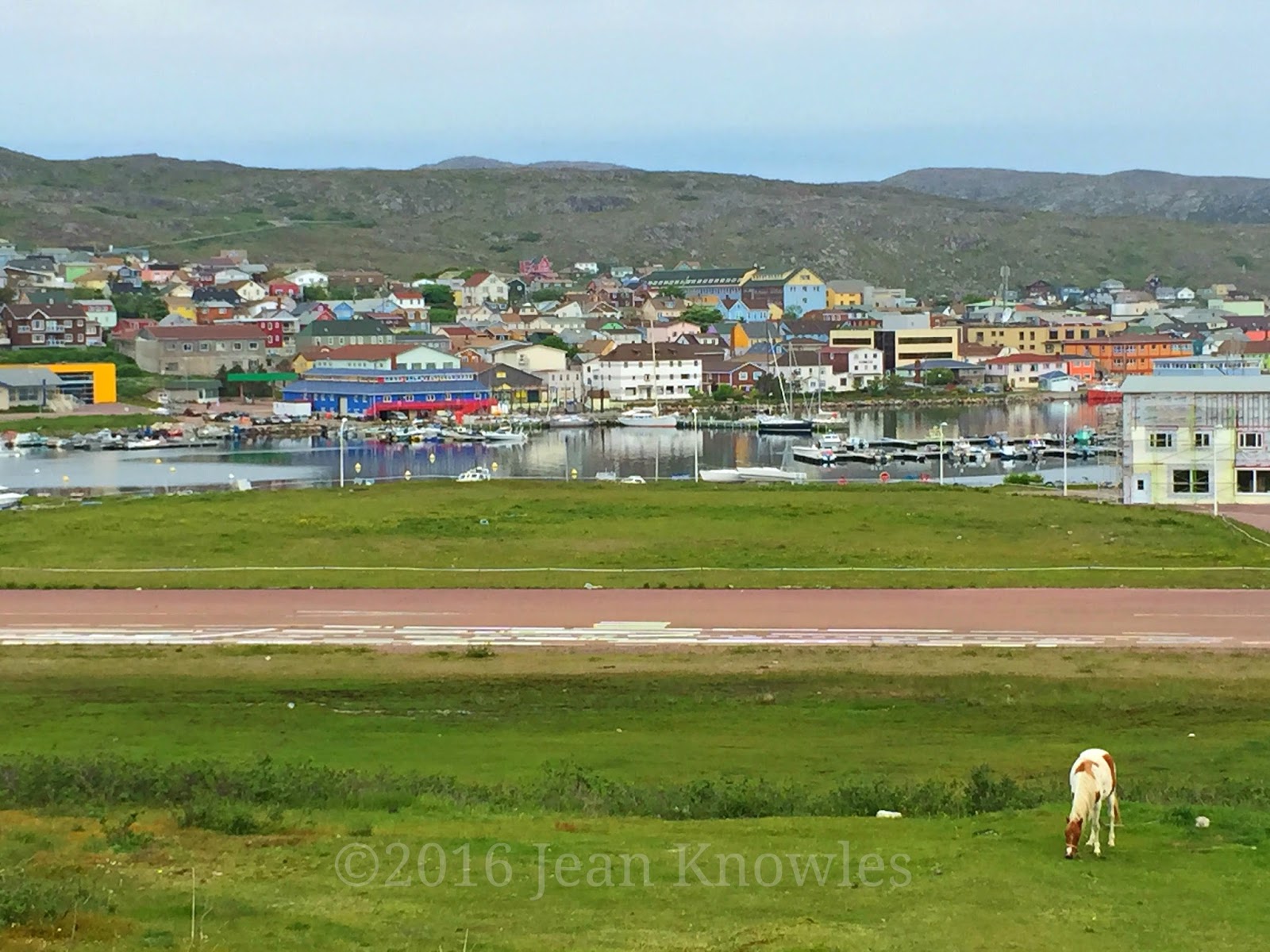
St. Pierre & Miquelon -- a true taste of Europe in North America

St. Pierre


Le Café du Chat Luthier
YJust west of Newfoundland's Burin Peninsula lie the islands of St. Pierre and Miquelon, France's last outpost in North America. This overseas collectivity of France has a population of a little over 6000, and is principally made up of two islands, St. Pierre -- more heavily populated and the smaller of the two -- and Miquelon-Langlade. A third island, Ile-aux-Marins, is located just off the town of St. Pierre and is no longer occupied. The islands lie a short ferry ride from the port of Fortune, Newfoundland and Labrador, or can be reached by air from Halifax, Montreal and St. John's; travel between St. Pierre and Miquelon can be accomplished by air or by local passenger ferry. The islands are also a popular stop for cruise ships both large and small; a great way to visit is on an expedition cruise like those offered by Adventure Canada; I first found my way here on their Newfoundland Circumnavigation, and will return in 2016 on their Mighty St. Lawrence cruise.


Miquelon
The two islands have distinctly different personalities; St. Pierre has a more cosmopolitan feel despite its small size, with restaurants, hotels and shops ranked along its narrow streets, while Miquelon has a much more rural and relaxed atmosphere. Both islands, though, boast brightly coloured houses and beautiful scenery. Wine shops, patisseries and cafes make for some great culinary experiences -- after all, this is France and the wines and baked goods are legendary. Just like in mainland France, a visit to a small shop will provide plenty of options for a light lunch, including locally produced chevre and fois gras. Remember that even though this is definitely France and locals tend to be very fashionably dressed, a good pair of walking shoes is essential.


Ile-aux-Marins
Tourism information centres can be found in both towns, and local sightseeing tours by van can be arranged. A water taxi to Ile-aux-Marins makes for an interesting addition; the island is used as a summer home by some local residents, and historic and cultural displays can be found there. The heritage of the islands' residents is varied; on Miquelon there are many descendants of the Acadians, expelled from New France by the British in 1755, and many islanders also trace their ancestry to the Basque region. Local residents are friendly and most speak excellent English; if you speak French this is a great opportunity to put it to use, but don't hesitate to go because of a language barrier -- you'll get along just fine in English.


Lobster on the menu!
St. Pierre boasts several very comfortable hotels in its central district, while Miquelon has bed and breakfast accommodations. Information on transportation to the islands and on local activities and culture can be found here. Currency is the Euro; both St. Pierre and Miquelon have banking machines where cash can be purchased, and credit cards are widely accepted.
See you in St. Pierre and Miquelon!

Tuesday, May 07, 2013

Comfort and Hospitality at the Clockmaker's Inn


The Clockmaker's Inn at Windsor, NS stands proudly at a spot called Curry's Corner; this stately home with its distinctive mansard roof was built in 1894 for local merchant Rufus Curry, who occupied it until his death in 1934; his widow, Cornelia, stayed on in the house until 1946.  After some thirty years, it was bought by Dennis and Veronica Connolly, who converted it to a bed and breakfast and named it after Sam Slick, the "Yankee clockmaker" who appeared in the tales of Judge Thomas Chandler Haliburton, a native of Windsor. The current owners acquired the property in 2005; the Inn as it appears today is shown above in a painting by artist David Howells.


Extensive renovations added three new suites on the third floor of the Inn like the well-appointed King's Suite shown above, adding to the five rooms and one suite on the second floor. The ground floor houses common rooms including the breakfast room, and is graced with several handsome fireplaces. 


Ornately carved woodwork, parquet floors, and handsome stained-glass windows give a gracious feel to the house, like this dramatic window, located on the landing of the main stairwell. 


Breakfast is hearty and cooked hot to order at the time of your choice, with choices like French toast, pancakes, omelettes and more; juice, coffee and tea, yogurt, cereals are available too, served buffet-style in the breakfast room.


The Clockmaker's Inn is owned and operated by the Dunhams, Debbie and Rick; their daughter Sarah, her husband Sean and their two adorable sons Frankie and Charlie. They provide a warm and friendly welcome. You'll find a link to the Inn's website here.

Friday, May 03, 2013

The Places Left Behind

I find myself drawn to abandoned buildings; there's so much mystery and poignancy about them, and they speak of lives left behind. Each one tells a story: houses that once were filled with life and laughter, shops that once saw a booming trade, or barns that once provided warmth and shelter for animals.


On a recent drive along the coast of Shelburne County between Port Saxon and Churchover via the Lighthouse Route, I stopped to look at two houses and a former general store. The first of the houses was in the village of Ingomar, on a stretch of road leading out of town toward the end of the point. I got out of the car to take a closer look, and when I took out my camera and shot through a broken window, a small animal chattered at me from inside. At least I think it was a small animal; I decided not to stay around long enough to find out.


The abandoned general store was also in Ingomar, on the main road leading into the community. Large windows had been boarded over, and next to the entrance door a thermometer on a metal backing had been hung from the wall. The glass appeared intact, but all the markings were lost in rust so I have no idea how warm -- or cool -- it was when I visited. I can imagine, though, that it was a selling tool in summer, when the proprietor could point out how hot it was, and convince the local children that a scoop of strawberry ice cream was the only logical way to cool down!


The second of the houses was at Gunning Cove, overlooking McNutt's Island and Shelburne Harbour. Like the first, it was of simple Maritime vernacular design, and likely would have been home to a good-sized family. From its location next to the water, it was probably the home of a local fisherman; there were lilac trees planted nearby to scent the breeze, and evidence of a garden that had been well-tended in its day.


The feeling that these buildings bring on is, for me, a mixture of curiosity and melancholy. Black and white felt like the right treatment for them.


Monday, April 29, 2013

Shelburne's Historic Waterfront


The town of Shelburne, on Nova Scotia's scenic South Shore, was one of several communities that were destinations for the United Empire Loyalists who fled the United States during and after the American Revolution, from 1775 to 1812. Known in the U.S. as Tories, they had remained loyal to Britain and had not supported the efforts of the revolutionaries, sometimes actively opposing them. On May 4 of 1783, ships carrying 3073 Loyalists from New York anchored in the harbour of what was then known as Port Roseway, dramatically changing the course of southwestern Nova Scotia's history.


Prior to their landing, the entire territory of Nova Scotia, which then included the present-day province of New Brunswick, had a population of less than 20,000.  By the end of 1783, over 35,000 Loyalists had arrived, overwhelming both the limited infrastructure and the ability of the government in Halifax to cope with the arrivals.


In July of 1783, the name of Port Roseway was changed to Shelburne to honour Lord Shelburne, Secretary of State for the colonies who had served briefly as Britain's Prime Minister in 1782.


By 1784, the population of Shelburne had swelled to over 10,000 -- the largest town in British North America and more than twice the size of Halifax. Eventually most of these Loyalists either returned to the United States as the political climate became less hostile, or moved on to other areas of Canada. They left behind a carefully laid-out town with streets named after members of the Royal Family, and a number of handsome and well-constructed homes and businesses. Today, Shelburne provides an interesting stop for the cultural explorer, with its cluster of museums and restored buildings. Shown here, from the top, are the Shelburne County Museum, the Ross-Thomson House, the Old Dory Shop Museum, and the impressive Cox's Warehouse, its cupola and spire added for the filming of The Scarlet Letter in 1995.